Reducing emissions through small changes: the role of industrial induction cooktops in sustainable operations
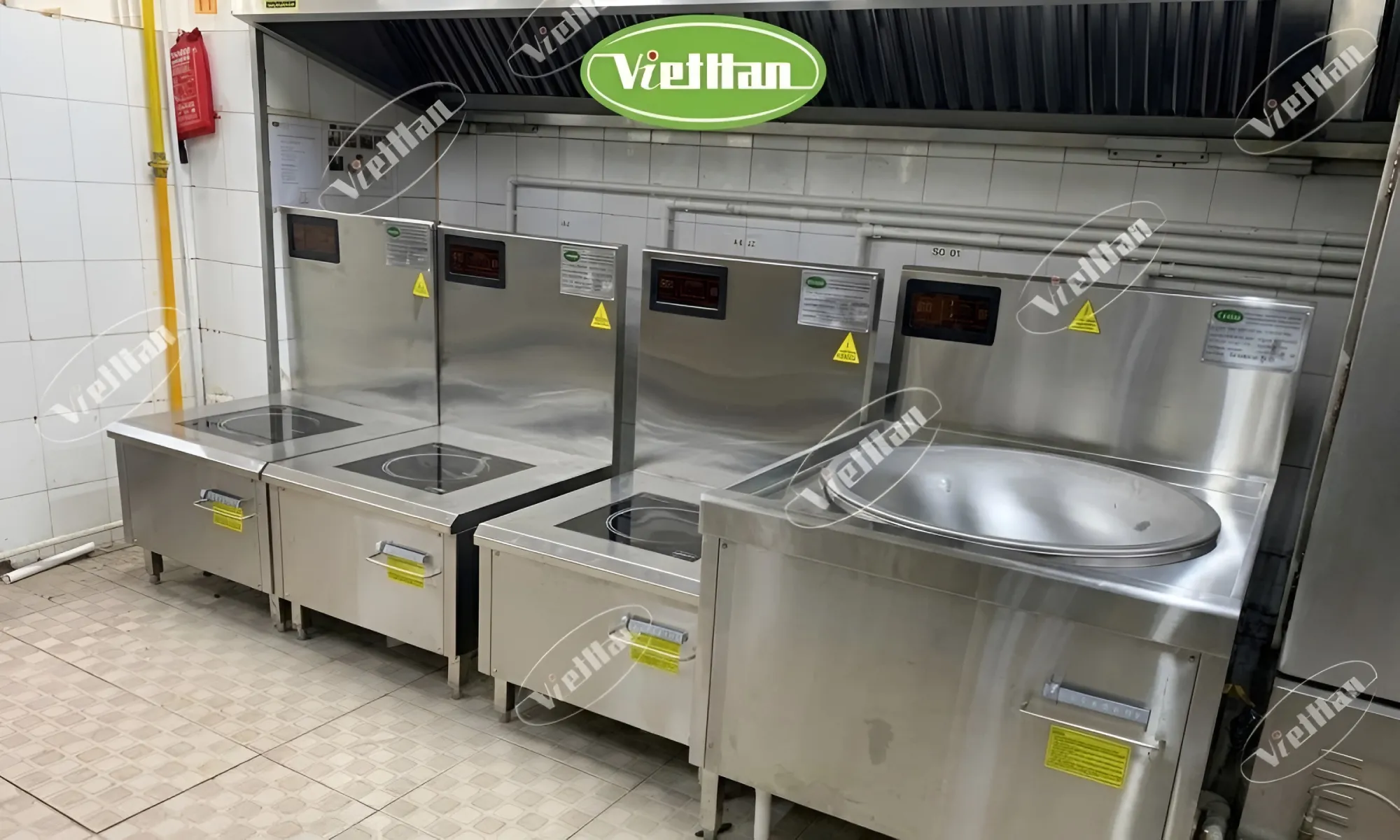
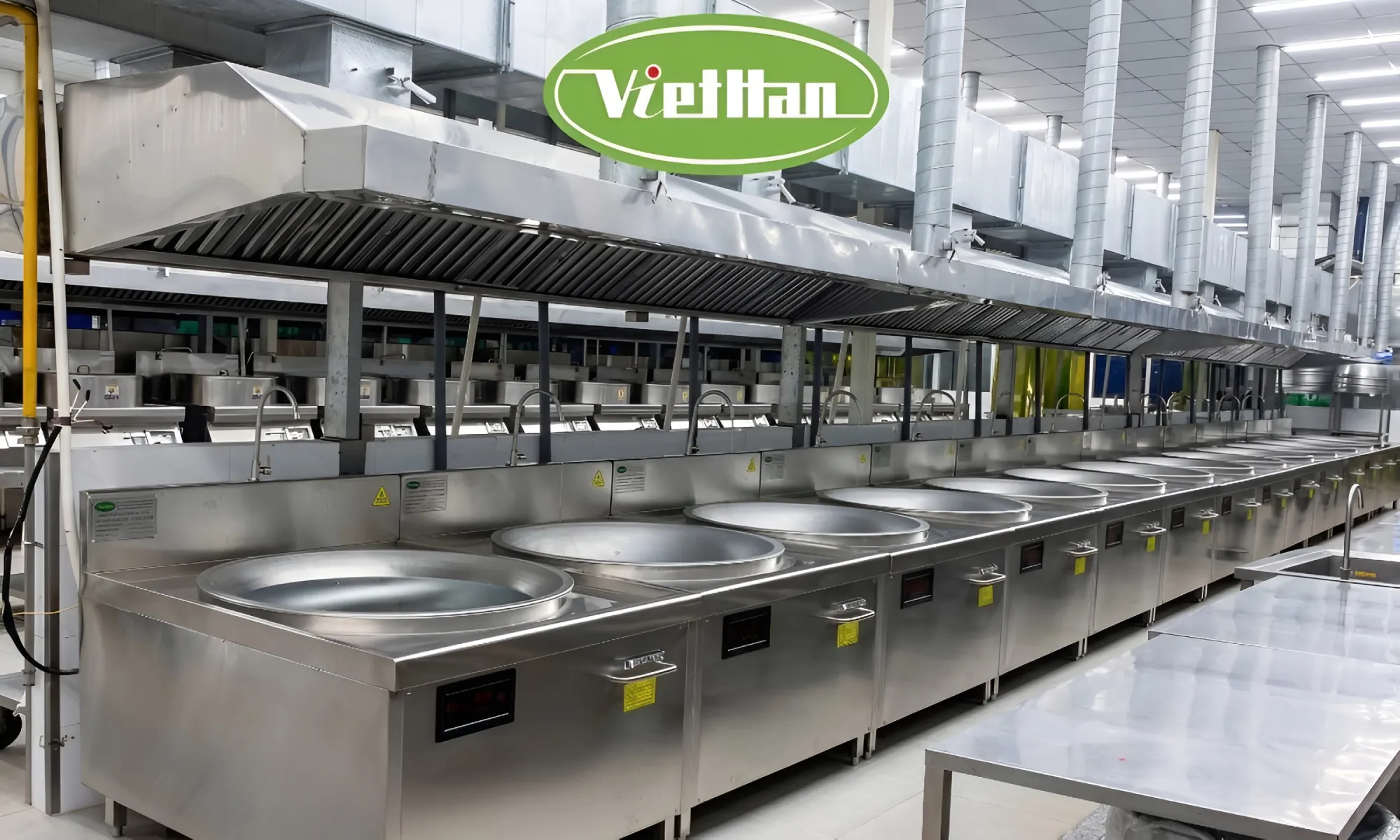
In Viet Han Group’s development orientation, transitioning to industrial induction cooktops is not only an equipment upgrade, but also an important step toward reducing emissions, optimizing operations, and moving toward a long-term sustainable model.
When traditional cooking operations generate more emissions than expected
For many years, gas stoves and fossil-fuel-based cooking equipment have been the standard choice in restaurants and commercial kitchens. However, the emissions generated during operation are often much higher than commonly perceived.
Gas stoves and fossil fuels produce CO₂ during use
Each use of gas combustion directly releases CO₂ into the environment. This is an inherent result of burning fossil fuels.
Beyond producing heat, this process generates accumulated emissions over time. In continuously operating commercial kitchens, these emissions not only affect the external environment but also impact indoor working conditions.
Restaurants and commercial kitchens as significant daily emission sources
A single restaurant may operate its kitchen equipment for dozens of hours each day. At scale, emissions are no longer negligible—they become a significant part of operational environmental impact.
When multiplied across hundreds or thousands of establishments, this impact extends beyond individual facilities and becomes part of a broader environmental challenge.
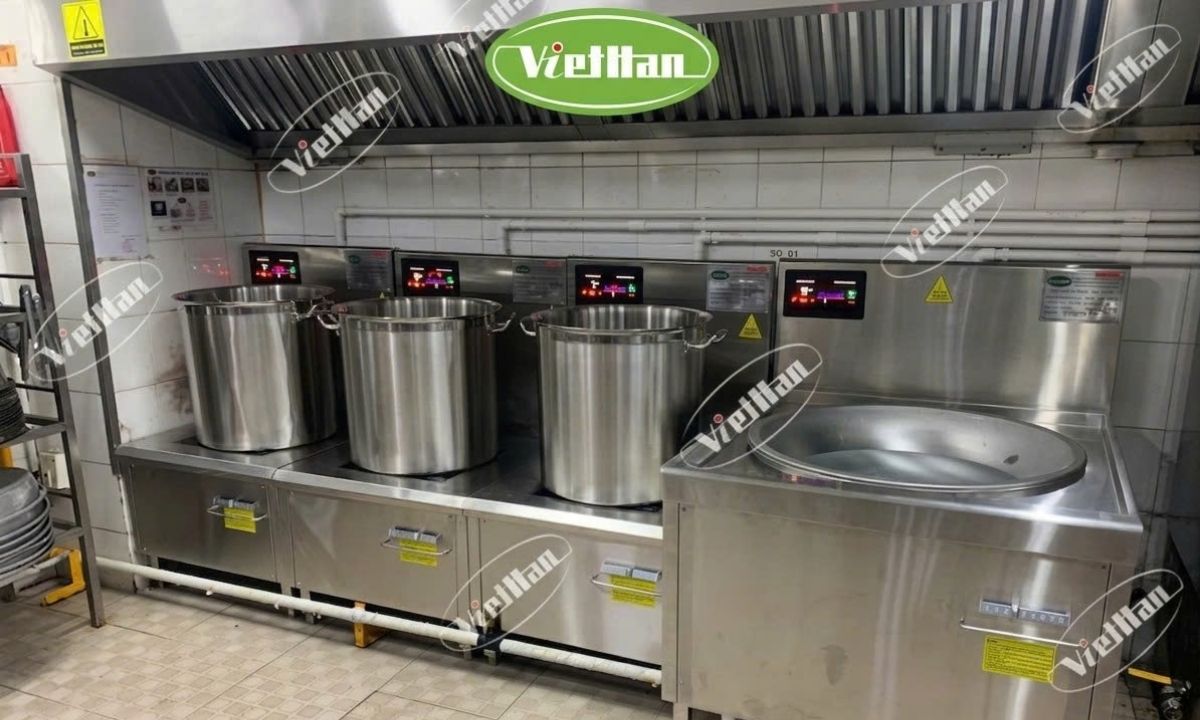
The pressure to reduce emissions is changing how kitchen equipment is selected
As environmental concerns become more tangible, the way businesses choose equipment is also shifting toward more responsible decision-making.
F&B and manufacturing businesses are increasingly focused on carbon footprint
Companies are no longer only concerned with operating costs, but also with the emissions generated throughout their operations.
Measuring carbon footprint is no longer a distant concept—it has become a key benchmark for evaluating the sustainability of a business model. This pushes organizations to reassess their operations, starting from even the smallest elements such as kitchen equipment.
Energy-efficient equipment becomes a key selection criterion
Instead of choosing equipment based only on capacity or price, businesses are beginning to prioritize solutions that reduce energy consumption and emissions. This is not only a way to lower long-term costs, but also a way to demonstrate responsibility toward the environment and customers.
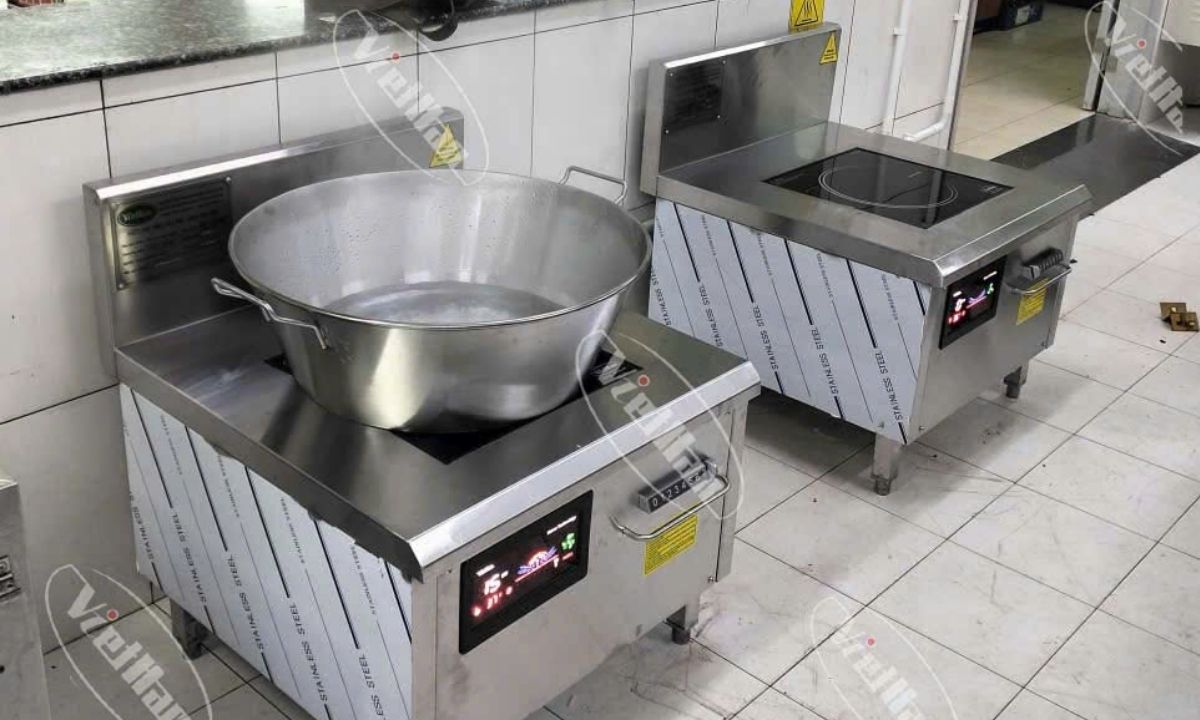
Industrial induction cooktops reduce emissions through the way they operate
In commercial kitchen environments, where equipment runs continuously at high intensity, changing the energy source and heat transfer method can create a significant difference. Industrial induction cooktops are not just an alternative option, but a different approach to cooking itself—one that is no longer tied to fuel combustion.
No direct combustion, therefore no CO₂ emissions at the point of use
Gas stoves operate through the combustion of fossil fuels, and each ignition produces CO₂ along with other emissions. In contrast, induction cooktops use electricity to generate a magnetic field that heats the cookware directly, without any flame or combustion process. This means no CO₂ is emitted at the point of use.
In enclosed kitchen environments, this difference is especially noticeable. Cleaner air, less smoke, and reduced excess heat improve working conditions for staff while also reducing the need for forced ventilation systems.
High efficiency reduces overall energy consumption
Gas stoves often lose a significant portion of heat to the surrounding environment due to open flames, while induction systems transfer heat directly to the cooking vessel. This results in shorter cooking times and reduced energy waste.
With higher efficiency, the total energy required for the same task is reduced. This not only lowers operating costs but also contributes to reduced indirect emissions across the broader energy supply chain.
Measurable emission reductions through concrete data
Reducing emissions is not only a conceptual direction but can also be expressed through measurable figures in real operations. When comparing different equipment options, businesses can estimate changes in carbon emissions across different scales of usage.
CO₂ comparison between gas and induction cooking under the same operating conditions
Induction cooktops produce no direct emissions at the point of use, although they still generate indirect emissions depending on the electricity source. However, in overall evaluation, these emissions are typically lower due to higher energy efficiency and reduced heat loss.
This means that for the same level of output, induction systems can reduce total emissions compared to gas stoves, especially as electricity grids increasingly shift toward cleaner energy sources.
Estimated emission reductions at scale
By switching to induction cooking, direct emissions are eliminated, while indirect emissions are also reduced thanks to improved efficiency. In large-scale commercial kitchen operations, this reduction is no longer marginal but becomes a significant factor in corporate decarbonization strategies.
The ability to estimate and track these indicators helps businesses take a more proactive role in building a sustainable operating roadmap.
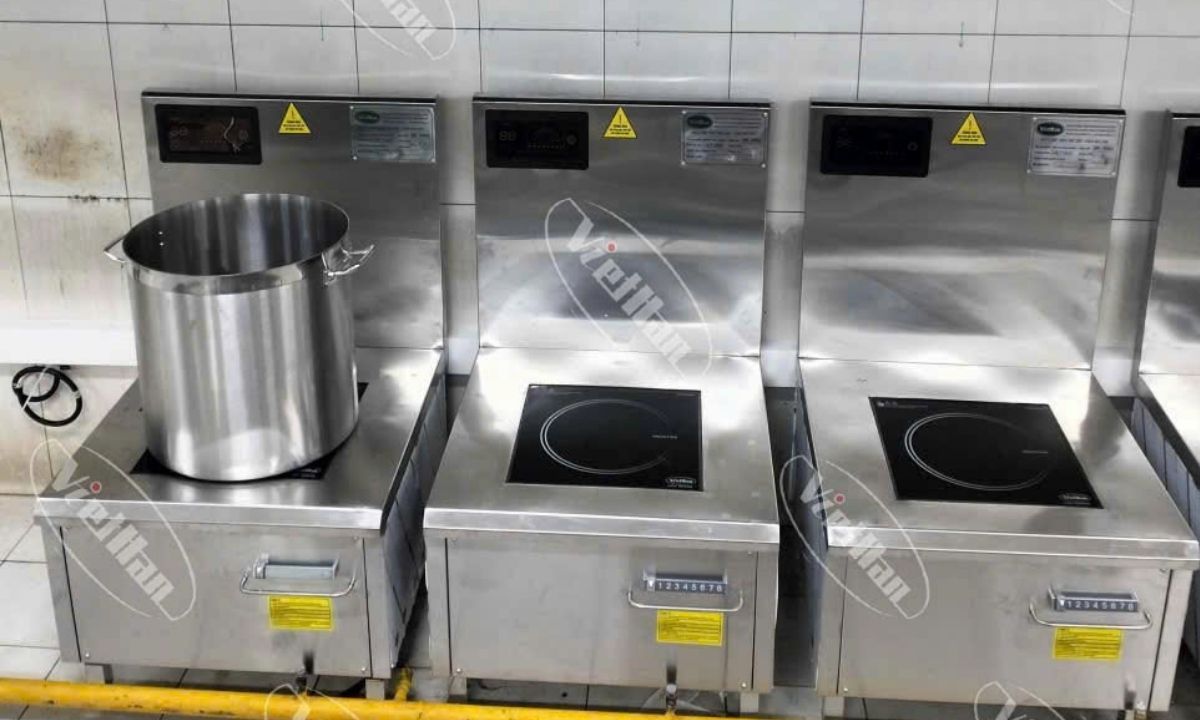
Beyond the environment: induction cooktops also optimize cost and operational safety
Reducing emissions is not the only benefit. In real-world operations, switching equipment also brings clear improvements in cost efficiency and workplace safety.
Reduced heat loss and lower energy consumption
Because induction cooktops transfer heat directly to cookware, they significantly reduce heat loss into the surrounding environment. The kitchen space remains cooler, reducing the need for additional cooling and ventilation systems. At the same time, energy is used more efficiently, helping lower overall operating costs over time.
This is especially important in continuously operating kitchens, where even small efficiency gains can accumulate into significant savings.
Lower fire risk and improved working conditions
The absence of open flames and flammable fuel sources significantly reduces the risk of fire and explosion in the kitchen. In addition, the lack of combustion gases and smoke creates a cleaner and more comfortable working environment. Staff working in lower heat and cleaner air conditions experience less physical strain, leading to improved productivity.
Safety is not only a technical requirement but also a core factor that directly influences long-term operational quality.
The shift toward sustainable kitchen equipment is becoming increasingly evident
The change in how equipment is selected is no longer individual, but is becoming a broader trend across the service and production industries.
Restaurants, hotels, and commercial kitchens are gradually transforming their operating models
Many organizations are reassessing their entire operational systems, from ingredients and processes to the equipment they use. Switching to induction cooking is not only about reducing costs, but also part of a broader roadmap to improve operational quality and reduce environmental impact.
This transition is happening gradually, but clearly and with direction, showing that the industry is moving toward more sustainable practices.
Businesses prioritize solutions that are both efficient and environmentally responsible
Equipment is no longer expected to simply perform well, but also align with long-term development goals.
Companies are increasingly prioritizing solutions that optimize operations while still ensuring environmental responsibility. This is not only a strategic choice, but also a response to rising expectations from the market and consumers.
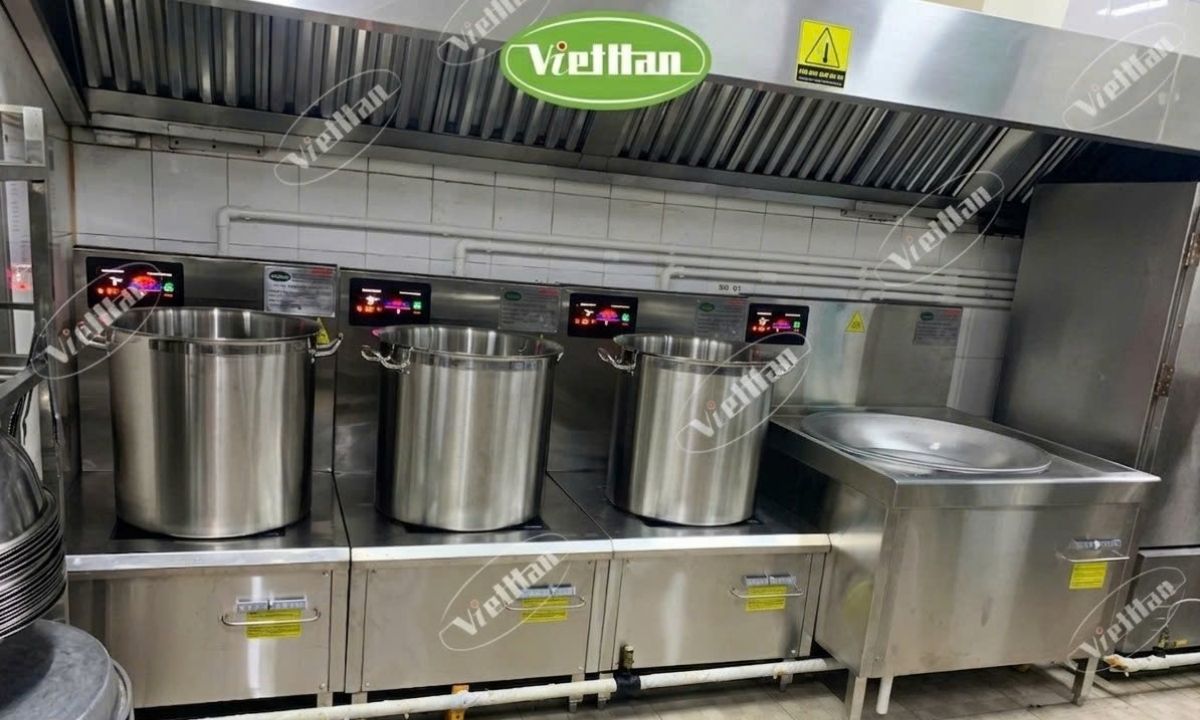
Industrial induction cooktops as part of a sustainable operations strategy
A small change in equipment can become the starting point of a much larger transformation across an entire operational system.
Not just equipment, but a long-term emissions reduction solution
Induction cooktops are not simply a replacement for gas stoves, but a solution that enables continuous and stable emission reduction. When applied at scale, they help reshape how businesses consume energy and manage daily operations.
Contributing to an ESG-oriented business model
Choosing sustainable equipment is part of how businesses build a responsible development model. Starting from practical changes such as in kitchen operations, companies can gradually refine their systems toward lower emissions, optimized resource use, and improved working environments.
This becomes the foundation for a business model that is not only efficient, but also sustainable in the long term.
Conclusion
Reducing emissions does not necessarily require large-scale transformations from the outset. It can begin with the way daily operations are carried out.
With a commitment to sustainable development, Việt Hàn Group adopts industrial induction cooking as a practical solution that helps businesses optimize efficiency, reduce environmental impact, and gradually build a long-term, sustainable operating model.