From a 500-year-old woven mat village to the journey of reviving the cultural heritage of Tra Nhieu.
In the development journey of Viet Han Group, the restoration of Tra Nhieu craft village is not only about preserving a heritage, but also about bringing centuries-old cultural values back into modern life in a more sustainable and meaningful way.
Sedge is the ecological and cultural foundation of a long-standing traditional craft village.
Not by coincidence can a traditional craft village survive for hundreds of years. Behind every product lies a natural ecosystem and a strong connection between people and the land.
Linked to the alluvial region of the Thu Bon River and a weaving craft of over 500 years
Sedge grows on the alluvial, brackish lands along the Thu Bon River, where the water both nourishes and shapes an entire craft village.
For over 500 years, sedge has not only been a raw material but also the foundation for the people of Tra Nhieu to create mats serving daily life. From simple homes to sacred spaces, sedge mats have long been an essential part of local living.
Carrying ecological value and natural materials in daily life
Beyond its practical use, sedge also helps retain soil, prevent erosion, and create habitats for various species.
As a natural material, sedge is durable, breathable, and biodegradable. Each mat is not only a handcrafted product but also the crystallization of nature and human hands, carrying both ecological and cultural values.

Tra Nhieu is not just a craft village, but a living cultural space
If we only look at its products, Tra Nhieu is a traditional craft village. But seen more deeply, it is a living environment where culture and nature coexist.
A combination of fishing village, coconut forest, and agricultural life
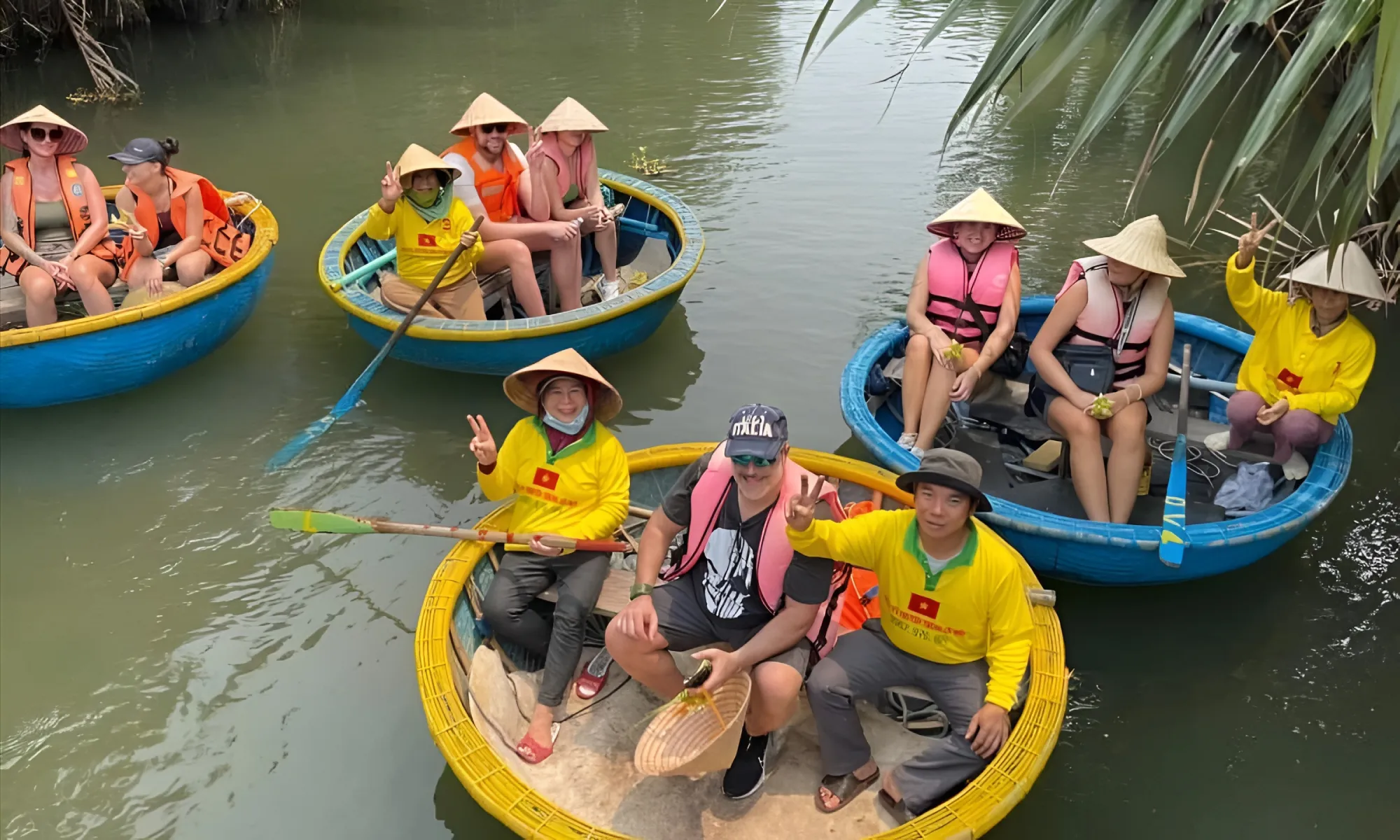
Tra Nhieu is not separated from its surrounding ecosystem. It includes fishing villages with basket boats, mangrove palm forests, rice fields, and the distinctive rural lifestyle of a riverine region.
This layered diversity creates a living space not only for production, but also for preserving cultural values across generations.
Located along the connection axis of Hoi An, the sea, and the Thu Bon River
Tra Nhieu is not isolated; it sits along an important connection axis between Hoi An Ancient Town, the sea, and the Thu Bon River. From here, it only takes a short journey to reach multiple landscapes. This creates potential for the village not only to exist, but to become a destination within a cultural exploration journey.
When a craft village faces the risk of fading over time
Not all craft villages disappear because they lose their value. Often, what causes a craft to fade is that it no longer fits into the flow of modern life.
Traditional livelihoods are gradually shrinking
As industrial products become more widespread, plastic mats and alternative materials emerge with lower prices, faster production, and greater convenience.
Meanwhile, each handcrafted sedge mat requires significant time and effort, from harvesting, drying, dyeing to weaving. The heavy workload but modest income causes many young workers to leave the village and lose interest in the craft.
When livelihoods are no longer sufficient to sustain life, traditional crafts shrink not because people want to abandon them, but because they have no other choice.
Cultural values are at risk of interruption
A craft village is not only lost when products are no longer made, but when there is no one left to inherit it.
When younger generations do not continue learning the craft, techniques, experience, and even the stories behind each process gradually disappear. Things once familiar, such as selecting sedge, natural dyeing methods, or hand-weaving techniques, can become memories.
A craft village does not disappear suddenly; it fades slowly. And when it is no longer present in daily life, its cultural value gradually becomes detached from the community.
Preserving heritage in a new way: bringing tradition back into everyday life
Preserving a craft village cannot be limited to safeguarding memories. If heritage is no longer used and no longer connected to daily life, preservation becomes merely symbolic.
Building a living museum model integrated with the craft village
Instead of creating a static exhibition space, the museum model is envisioned as an integral part of the craft village itself.
The space is not enclosed but opens into sedge fields, river landscapes, and local daily life. Visitors can move through the area, observe, and experience the entire craft-making process in its natural environment.
The weaving craft continues instead of being merely displayed
The key difference lies not in form, but in approach. The weaving craft is not “preserved” as something to observe, but continued as something alive.
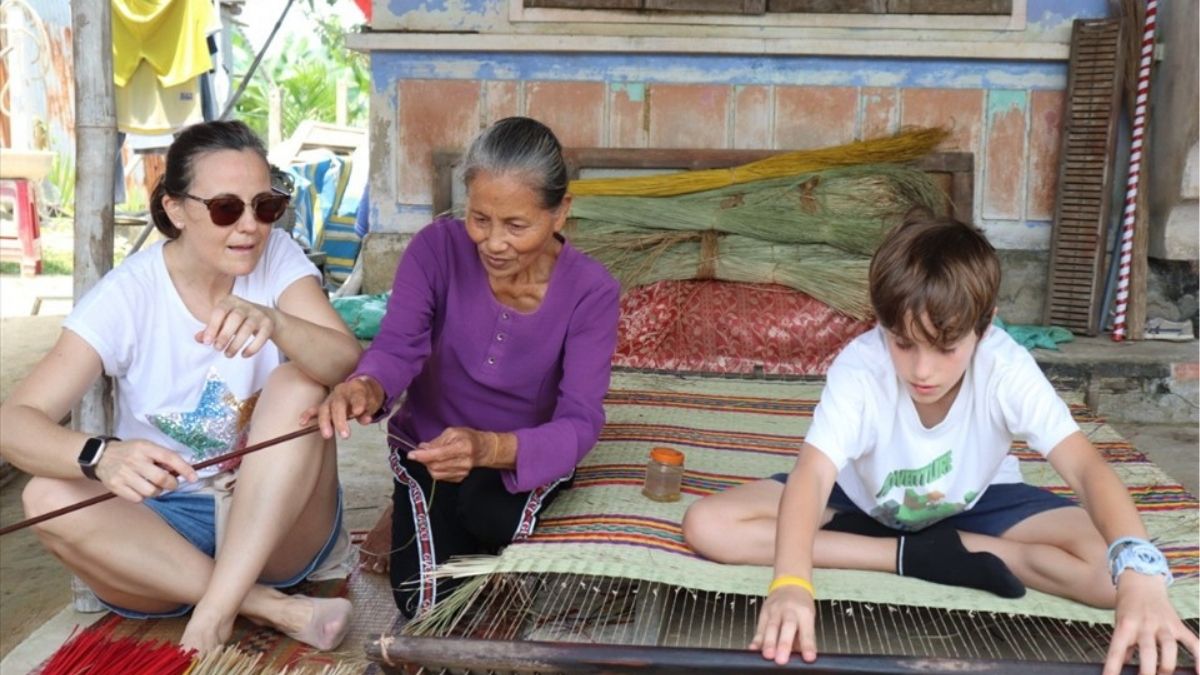
Artisans keep working, the process continues, and products are still created and used. Visitors do not only come to watch but can become part of the process. When the craft is actively practiced, heritage is no longer the past, but the present.
An integrated model for sustainable craft village revitalization
A craft village can only exist long term when placed within an ecosystem capable of self-sustaining operation. Beyond production, it must connect with tourism, experiences, and modern life to generate real value.
Combining retreat, wellness, and cultural space
The model is designed to blend into the riverside and sedge field landscape rather than stand apart from it. Visitors come not only to stay, but to experience a different rhythm of life, slower, closer to nature and local culture.
Creating a journey from accommodation to hands-on craft learning
From accommodation and sightseeing to participating in activities such as mat weaving and sedge dyeing, the entire journey is designed as a seamless experience. Learning the craft is no longer a separate activity, but a natural part of the experience.
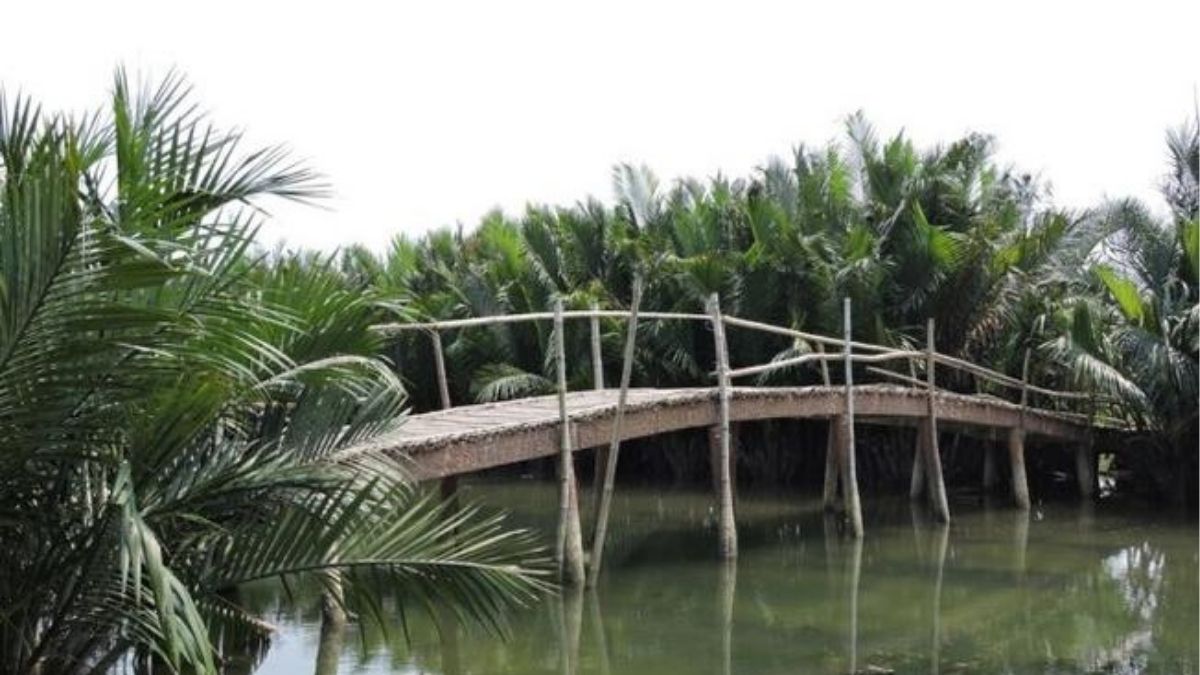
When visitors become part of the craft preservation journey
A sustainable model cannot rely on preservation alone; it requires participation from multiple stakeholders. When visitors engage, they are no longer observers but become part of the process that helps sustain the craft.
Hands-on experiences through workshops and real activities
Visitors can take part in different stages of the craft, from splitting sedge, dyeing, to weaving mats. By creating a product with their own hands, the value of the craft is no longer just information, but a personal experience.
Creating jobs and income opportunities for local communities
Each experiential activity generates direct economic value for local people. From artisans and sedge farmers to service providers, all are connected within a single value chain. This is how the craft is not only preserved but also able to grow.
Reviving the craft village through long-term livelihood development
A craft village cannot exist if it does not generate enough economic value to sustain its people. Preservation only makes sense when it goes hand in hand with livelihood development.
Building a value chain from raw materials to experiences
From sedge cultivation and harvesting to production, experience activities, and product consumption, the entire process is connected into a complete value chain. This helps the craft move beyond reliance on a single source of income and opens multiple development pathways.
Integrating traditional crafts into modern life
When products are reimagined in terms of presentation and experiences are redesigned, traditional crafts are no longer confined to their original space. They become part of modern life, more accessible and relevant to a wider audience.
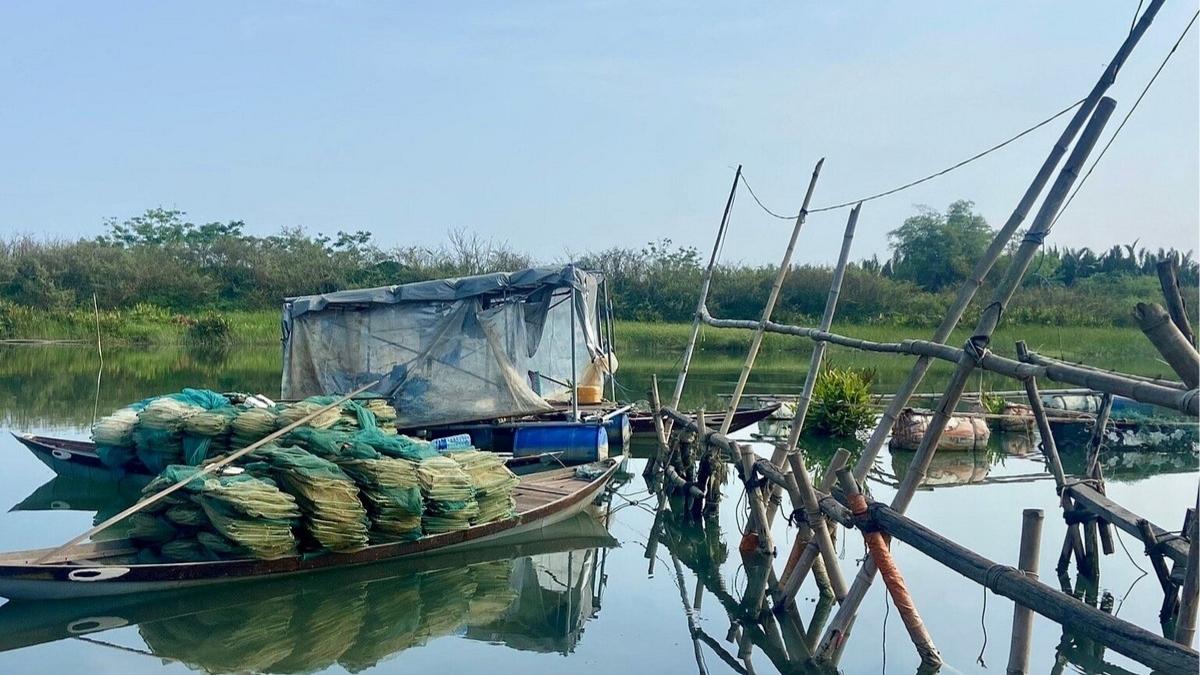
Connecting heritage, nature, and sustainable development
In Tra Nhieu, heritage is inseparable from nature. The sedge fields, the Thu Bon River, and the craft village life form an interconnected ecosystem. When one element is removed, the entire structure loses its natural balance.
No separation between preservation and development
In the past, many preservation models focused only on maintaining form without creating real usage value. This gradually detached heritage from everyday life.
With a new approach, the weaving craft is reintegrated into the flow of economy and tourism. It is not only a product, but also an experience, a story, and a part of the visitor journey. In this way, preservation is no longer about keeping something still, but about keeping it alive.
Creating long-term value for the local community
When a value chain is formed from sedge cultivation, production, experiences, to consumption, local people are no longer dependent on a single source of income. Artisans gain stable jobs, farmers have a reliable market for raw materials, and young workers have reasons to return to the craft.
When the community becomes the direct beneficiary, they do not preserve the craft out of obligation, but because it is part of their life. And this is what creates true sustainability, not through slogans, but through tangible value.
Conclusion
The journey of revitalizing Tra Nhieu is not only about preserving a craft village, but about rediscovering the place of heritage in modern life. Viet Han Group chooses an approach that goes beyond preservation, creating an ecosystem where culture, livelihoods, and experiences coexist and develop sustainably over time.